
Pipe Materials · April 8, 2026
Galvanized vs. Copper vs. PEX Pipe in Older FV Homes
Why Fountain Valley homes have such a mix of pipe, how to tell what you have, and what each material means for your water.
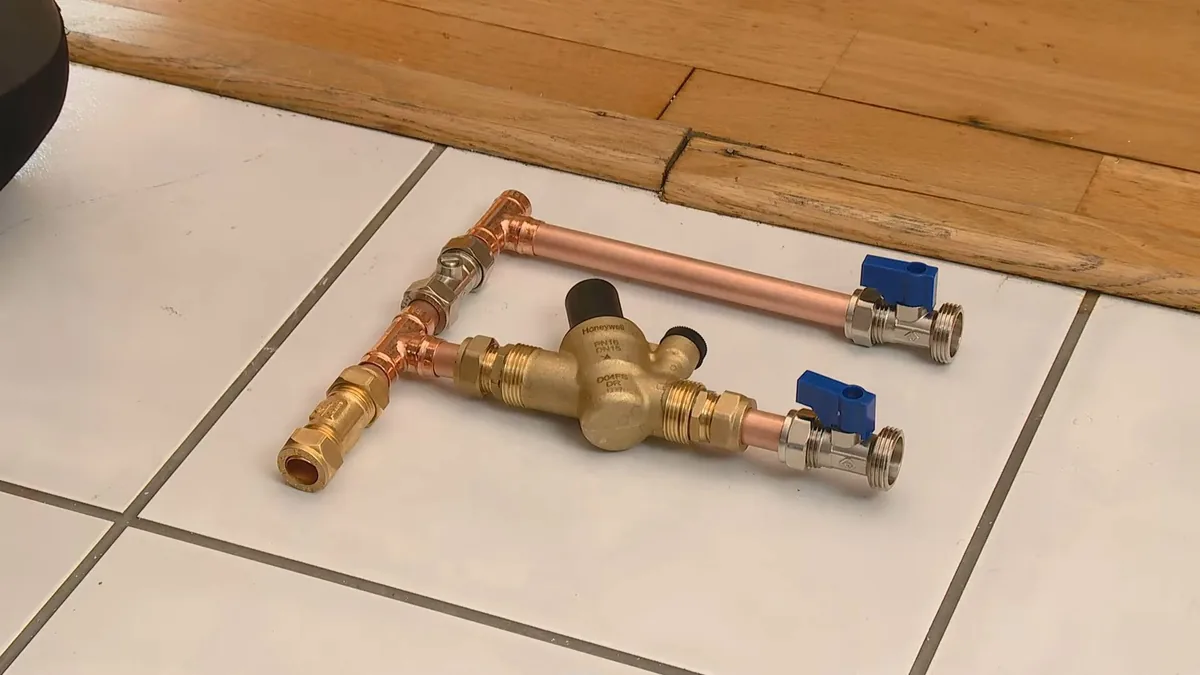
Open the walls of ten Fountain Valley homes and you might find three different supply materials, sometimes in the same house. That is because the city was built right across the years when residential plumbing changed, and remodels since have added their own layers. Knowing what is in your walls helps you understand your water, your pressure, and what a repair or repipe will involve.
Why FV homes are such a mix
Fountain Valley built out from roughly 1957 to 1980, the exact stretch when the industry shifted from galvanized steel to copper supply lines. Homes from the earlier end may still carry galvanized; homes from the later end got copper; and decades of partial remodels mean many homes have both, plus PEX where newer work was done. There is no single answer to what a Fountain Valley home is plumbed with, which is exactly why a plumber maps it before quoting a repipe.
Galvanized steel: the one that fails closed
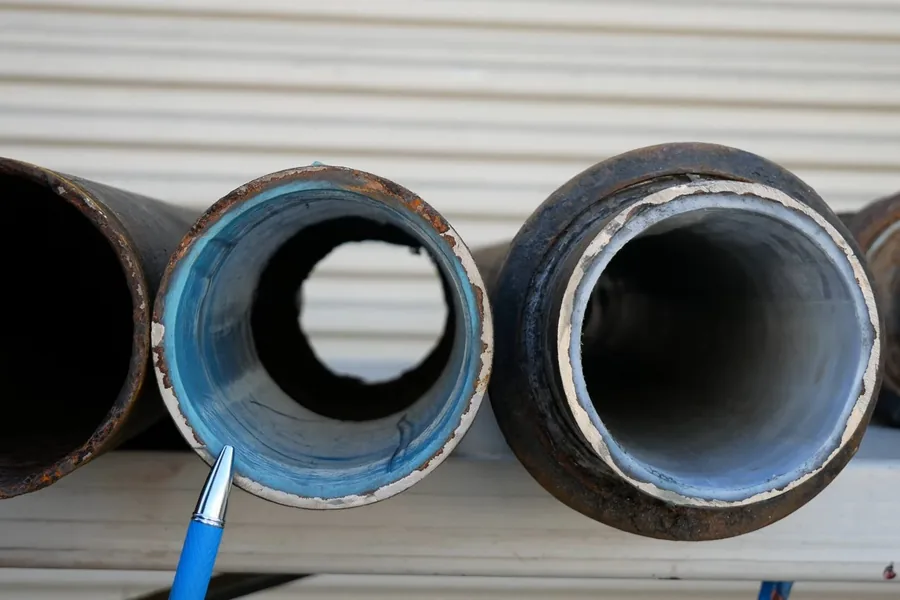
Galvanized steel pipe is zinc-coated steel, and it was standard for decades. Its problem is corrosion from the inside: over 50-plus years, rust and mineral scale build up on the interior wall, narrowing the channel until water can barely pass. The classic symptoms are low pressure that has crept up over years and brown or rusty water at first draw. If your home still has galvanized supply, it is living on borrowed time, and the pressure problem only gets worse.
Copper: proven, but not immortal
Copper replaced galvanized for good reasons: it does not rust the way steel does, and it has a long track record. But it is not immortal, especially the thinner-walled M-type copper used in many Fountain Valley tracts. In the city's very hard water, copper slowly thins from the inside, and in the old farmland soil under many homes it can corrode from the outside too. The result is the pinhole leak, a tiny hole that sprays or drips, and the slab leak when it happens under the foundation. Copper that has started developing pinholes tends to keep developing them.
PEX: the modern answer
PEX is cross-linked polyethylene, a flexible plastic tubing that has become the default for repipes. It does not corrode, it resists the scale that hard water leaves in metal pipe, and its flexibility means fewer joints behind your walls, which means fewer potential leak points. It installs faster than copper, which usually makes it less expensive. For a hard-water city like Fountain Valley, PEX has real, practical advantages, though copper remains a valid choice for homeowners who prefer it.
How to tell what you have
You can often get a clue yourself. Find an exposed section of supply pipe, in the garage, under a sink, or at the water heater. Galvanized steel is dull gray and magnetic; a refrigerator magnet sticks to it. Copper is the familiar reddish-brown metal and is not magnetic. PEX is plastic tubing, usually red, blue, or white. If you see dull gray magnetic pipe, you likely have galvanized somewhere in the system, and that is worth a closer look.
And the drain side: cast iron vs. ABS
Supply pipe is only half the story. The drains in Fountain Valley homes are typically cast iron in the earlier tracts and ABS plastic in the later ones. Cast iron, like galvanized supply, develops a rough, scaling interior as it ages, which is why older homes get more recurring drain clogs and eventually need sewer work. ABS, used in the city's newer tracts, is smoother and holds up better, so those homes tend to have fewer drain problems. Knowing which drain material you have helps explain why your kitchen line keeps clogging, or why it does not.
What it means for you
If your home is all galvanized or a galvanized-copper mix and you are seeing low pressure, rusty water, or repeat leaks, you are a candidate for a repipe, and it is usually a question of when, not if. If you have sound copper, good maintenance and softer water will extend its life. And if a previous owner already repiped in copper or PEX, you are in good shape. Either way, knowing what is behind your walls turns a guessing game into an informed decision.