
Acoustic & electronic location · Central OC
Slab Leak Detection & Repair in Fountain Valley, CA
Warm spot on the floor or a water bill that jumped? In Fountain Valley's slab-on-grade tract homes, that often means a slab leak. We locate it precisely before opening anything.
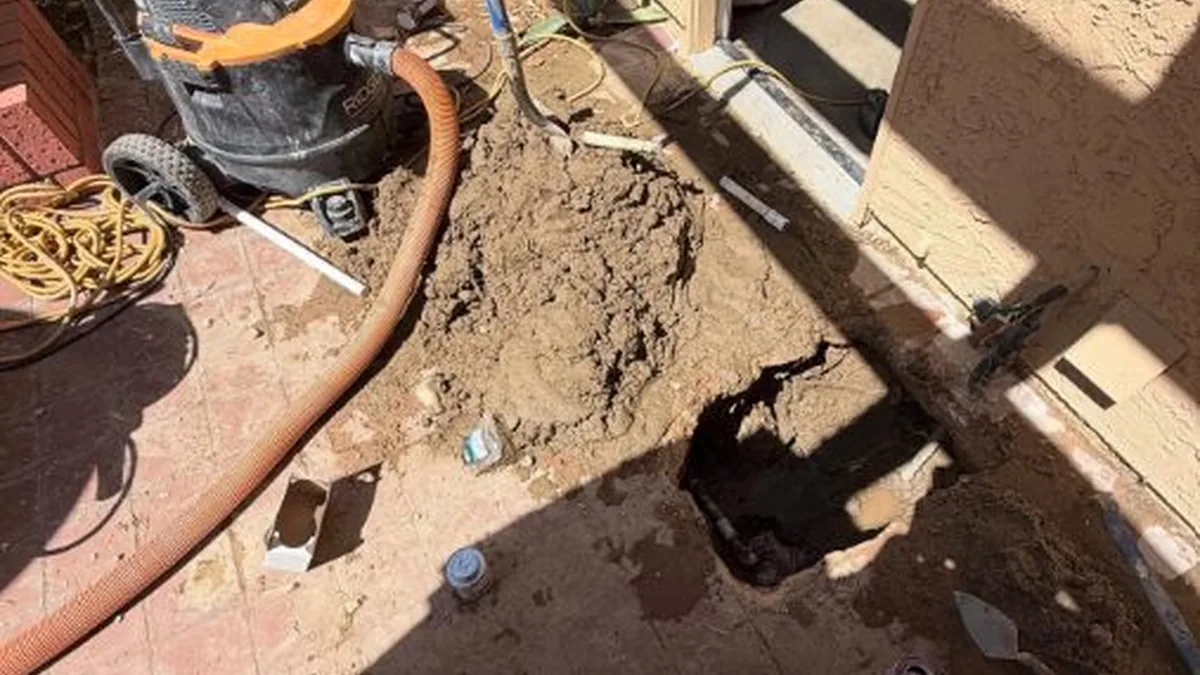
Slab leaks are one of the most common serious problems we see in Fountain Valley, and the reason is structural to the city itself. Nearly every tract home built here from the late 1950s through the 1970s sits on a concrete slab with copper water lines run through or beneath it. Five or six decades later, those lines are reaching the age where leaks begin.
Why Fountain Valley slabs leak
Two forces work on buried copper at once. From the inside, very hard water, the city averages roughly 11 to 14 grains per gallon, leaves scale and slowly erodes the pipe wall. From the outside, soil chemistry matters: parts of Fountain Valley and neighboring Garden Grove sit on former mid-century dairy farmland, and that ground can corrode copper from the outside in. Put a 55-year-old copper line in that situation and pinhole leaks are close to inevitable.
The classic signs of a slab leak in an FV home:
A warm spot on the floor
A hot-water line leak under the slab heats the tile or laminate above it. A patch of floor that is warm for no reason is a strong tell.
A water bill that jumped
Water running 24 hours a day under the slab shows up on the meter. A sudden, unexplained increase is worth a call.
The sound of running water
With the house quiet and every fixture off, a faint hiss or trickle can mean water is moving where it should not be.
Low pressure or a meter that never stops
If your shutoff is closed at the house and the meter dial still creeps, water is escaping between the meter and the home.
How we find the leak
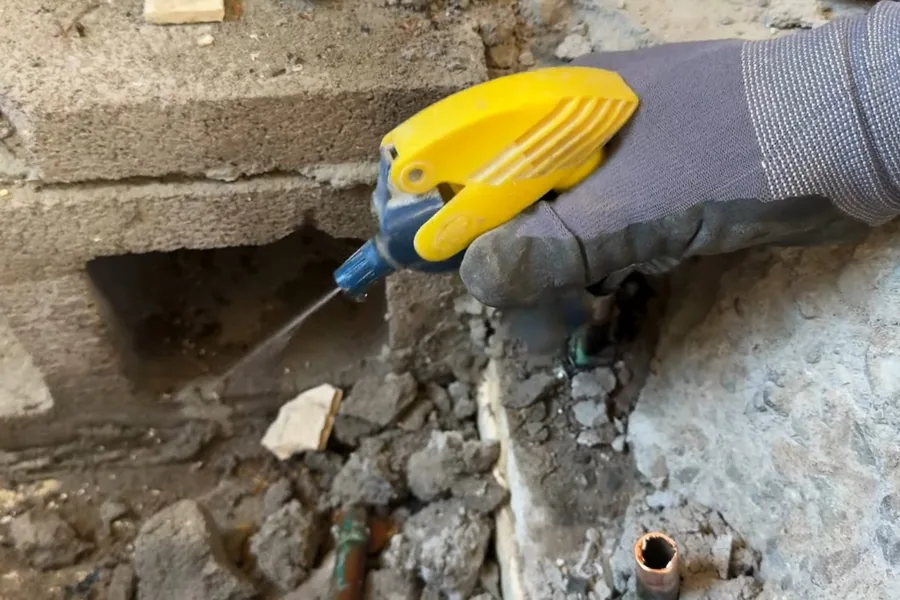
We confirm a leak exists at the meter, then locate it precisely before opening anything. Acoustic listening equipment picks up the sound of escaping water through the slab, and electronic line tracing and pressure testing narrow it to a specific spot. On homes built from the early 1980s onward, we check for post-tension cables in the slab before any cutting. Careful location is the difference between one small access cut and a torn-up floor.
Your repair options
Once we know where and why the line is leaking, there are three honest paths, and the right one depends on the pipe's overall condition.
Spot repair
For a single, isolated leak in otherwise sound pipe, we open a small access, repair the section, and close it up. This is the least expensive option, commonly in the $2,000 to $3,500 range in central OC depending on access and finishes.
Reroute
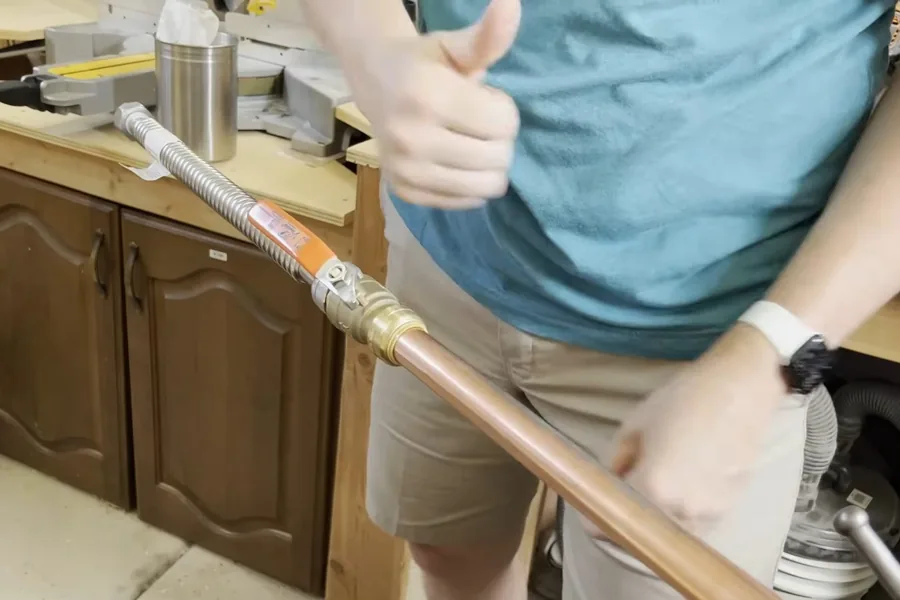
Rather than chase a leak under the slab, we abandon the failed segment and run a new line overhead through the attic and walls. This avoids breaking concrete and works well for a single problem line.
Whole-home repipe
When a system has already had multiple leaks, repairing one more is throwing money at a pipe that is failing everywhere. A repipe replaces it all and ends the cycle. We will tell you honestly when you have crossed that line.
Why we will not just keep patching
It is tempting to fix one leak and move on, and for a first leak that is often the right call. But copper that has failed once in a corrosive slab environment tends to fail again nearby. If your home is on its second or third slab leak, we lay out the math on repair-versus-repipe so you can make the call with real numbers instead of a sales pitch.
Slab leaks and your homeowners insurance
Many California homeowners policies treat the sudden water damage from a slab leak differently from the cost of accessing and repairing the pipe itself. Coverage varies widely between carriers, so we do not make promises about what your policy will pay. What we can do is document the leak properly: where it was, how we found it, and what the repair involved, with the photos and detail an adjuster typically asks for. That paperwork makes a claim go more smoothly if your policy covers part of the loss. We are happy to coordinate with your adjuster on the plumbing facts.
Catching a slab leak early saves the expensive part
The plumbing repair is rarely the costly part of a slab leak. The expensive part is what the water does while it runs undetected: warped flooring, damaged baseboards, and in the worst cases mold inside the slab and walls. That is why the early signs are worth acting on the same week you notice them. A water bill that quietly doubled, a floor that is warm in one spot, or the faint sound of running water at night are all cheaper to investigate now than to ignore. We would rather come out, confirm there is no leak, and charge you a small diagnostic fee than meet you after the floor is ruined.
How we locate a slab leak without tearing up your floor
The expensive way to find a slab leak is to start breaking concrete and looking. We do the opposite. We pinpoint the leak first with non-invasive equipment, so that when we do open the slab, it is in exactly one place: the spot that needs the repair. The tools work together. Acoustic listening equipment hears the sound of pressurized water escaping under the concrete. Electronic line tracing and pressure testing isolate which line is leaking, the hot or the cold, and narrow the location to within a small area. For a hot-water slab leak, thermal imaging can read the warm path of the water through the floor.
Used in sequence, these turn a whole-house mystery into a marked X on the floor. That precision is the entire point. It is the difference between one access cut and one patch versus several exploratory openings and the damage that comes with them.
Your repair options once we find it
There is rarely just one way to fix a slab leak, and the right choice depends on the pipe's overall condition and your plans for the home. We lay out the trade-offs plainly. A spot repair opens the slab at the leak, replaces the failed section, and patches it, which is the most direct fix when the rest of the pipe is sound and there has only been one leak. An overhead reroute abandons the leaking under-slab line and runs a new line through the walls and attic instead, avoiding the concrete entirely, which suits a single leak in an awkward spot. A repipe replaces the home's supply lines throughout, which becomes the honest answer once a home has had two or more slab leaks, because the next one is already coming.
We will give you a straight recommendation rather than defaulting to the most expensive option. If a spot repair will genuinely hold, we say so. If your pipe is failing and a repipe will save you money over the next few years of chasing leaks, we say that too.
Frequently asked questions
How do I know if I have a slab leak?
Common signs in Fountain Valley homes include a warm spot on the floor, a sudden jump in your water bill, the sound of running water when everything is off, and a water meter that keeps moving after you shut off the house. Any one of these is worth a call.
Will you have to break up my floor?
Not always. We locate the leak precisely with acoustic and electronic equipment first. Depending on the situation, the fix may be a small access cut, an overhead reroute that avoids the slab entirely, or a full repipe. We pick the least invasive option that actually solves the problem.
What does slab leak repair cost in central Orange County?
A spot repair on an isolated leak commonly runs about $2,000 to $3,500 depending on access and floor finishes. Reroutes and full repipes cost more but may be smarter if the system has leaked before. You get a written price before any work begins.
Why do so many Fountain Valley homes get slab leaks?
The city's tract homes were built on slabs with copper lines from the late 1950s through the 1970s. Very hard water wears the pipe from inside, and former dairy-farmland soil in parts of the area corrodes copper from outside. At 50-plus years, those lines reach failure age.
Should I repair or repipe?
A first, isolated leak usually makes sense to repair. Once a home has had two or more slab leaks in a few years, a repipe often costs less over time than chasing each new failure. We will show you the trade-offs honestly.
How do you find a slab leak without breaking the floor?
We pinpoint it first with non-invasive tools: acoustic equipment that hears water escaping under the slab, electronic line tracing and pressure testing to isolate the leaking line, and thermal imaging for hot-water leaks. Only then do we open the slab, in exactly one spot, so there is one access cut and one patch instead of several exploratory openings.
What are my repair options for a slab leak?
Generally three. A spot repair opens the slab at the leak and replaces the failed section, best when the rest of the pipe is sound. An overhead reroute abandons the under-slab line and runs a new one through the walls and attic, avoiding the concrete. A repipe replaces all the supply lines, which becomes the honest answer after two or more slab leaks. We recommend the one that fits your pipe's condition, not the priciest.
Will my insurance cover a slab leak?
It varies by policy. Many homeowners policies cover the resulting water damage and the cost to access the leak, even when they exclude the pipe repair itself. We document the leak and the work clearly so you have what you need to file, but you will need to check your specific policy for coverage.
Is one slab leak a sign I will get more?
Often, yes. The same conditions that caused the first leak, hard water wearing the copper from inside and old farmland soil corroding it from outside, affect the whole system equally. A single leak on otherwise sound pipe is a spot repair, but a second leak usually means the pipe is failing throughout and a repipe is the better long-term value.
Related plumbing services
Need slab leak detection & repair in Fountain Valley?
Get a real plumber, a straight diagnosis, and an upfront price. Available 24/7 for emergencies across central Orange County.