
Water Heaters · June 3, 2026
Water Heater Lifespan in Hard-Water Homes
Why heaters fail early in Fountain Valley, the warning signs, and the simple maintenance that buys you years.
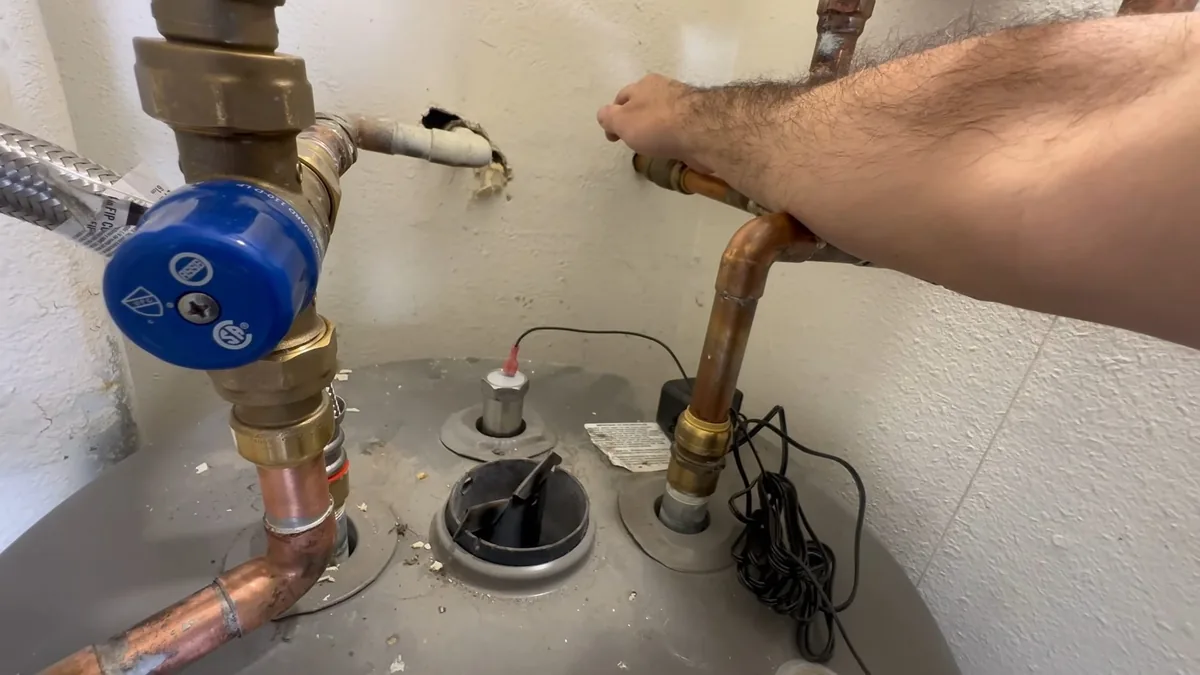
If your water heater seems to die younger than it should, you are not imagining it, and you are not buying bad units. Fountain Valley has some of the hardest water in Orange County, and hard water is the single biggest reason heaters here wear out years ahead of the manufacturer's optimistic estimate. Here is what is actually happening inside the tank, and what you can do to get more years out of it.
The real lifespan here
On soft water, a tank water heater might last 12 to 15 years. In Fountain Valley's very hard water, eight to twelve years is more realistic, and a neglected unit can fail sooner. That is not a defect; it is the water. Knowing the real number helps you plan a replacement on your terms rather than discovering a flooded garage on a unit you assumed had years left.
What hard water does inside the tank
Every gallon of hard water that enters your heater carries dissolved minerals, mostly calcium and magnesium. When that water is heated, the minerals drop out of solution and settle to the bottom of the tank as sediment. Over years, that sediment bakes into a hard crust. Three bad things follow:
Lost efficiency
The sediment layer insulates the water from the burner below, so the heater works harder and burns more gas to heat the same water.
Lost capacity
Sediment takes up space that used to hold hot water, so you run out faster than you used to.
Tank corrosion
Overheating at the tank bottom, where sediment traps heat, stresses and corrodes the steel until the tank eventually fails.
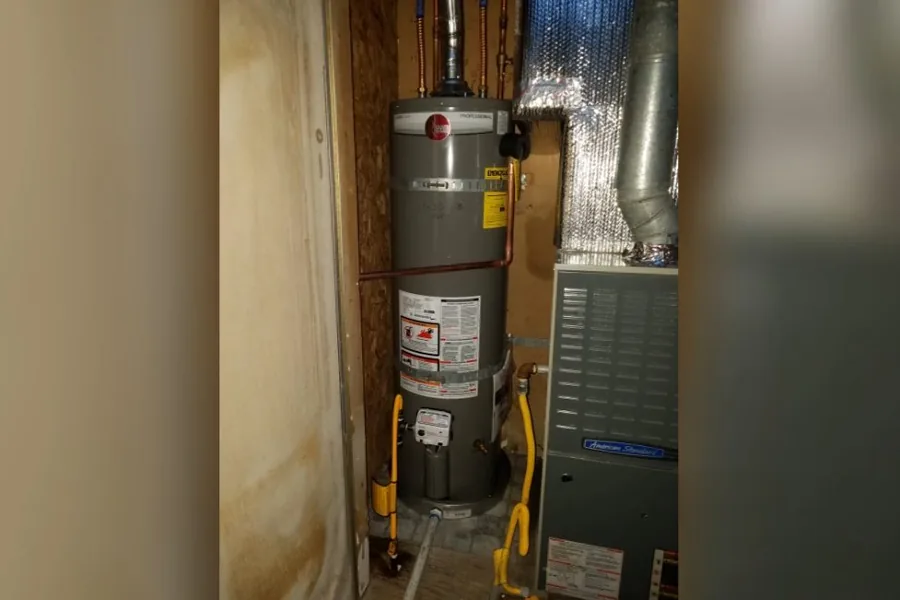
The warning signs of a tank near the end
A water heater usually tells you it is wearing out before it quits:
Popping or rumbling
That sound is water bubbling up through the hardened sediment layer. It is the hard-water signature, and it means scale has built up.
Running out of hot water sooner
Lost capacity from sediment, often the first thing a household notices.
Rusty hot water
Rust in the hot water means the tank is corroding from inside. This one points toward replacement.
Moisture or a leak at the base
A leak from the tank body itself is not repairable. That unit needs replacing before it fails completely.
The maintenance that buys you years
The good news is that the main thing shortening your heater's life is also the most preventable. A few habits make a real difference:
Flush it annually
Draining the sediment out of the tank once a year, before it bakes into a hard crust, is the single best thing you can do. A heater that is flushed regularly lasts noticeably longer than one that never is.
Check the anode rod
The anode rod is a sacrificial metal rod that corrodes so your tank does not. In hard water it gets used up faster. Replacing a spent anode rod partway through the tank's life can add years.
Soften the water
The most complete fix is to stop the minerals before they reach the tank. A whole-home water softener protects the heater along with your pipes and fixtures, and it is the reason softened-water homes get longer heater life.
When it is time to replace
If your unit is under about eight years old and the problem is a part, a thermocouple, a valve, an element, a repair is usually the better value. Once a tank is leaking from the body, heavily scaled, or past ten years in this water, replacement is the honest call. When you do replace, sizing the new unit to your household and installing it to code, including the seismic strapping required in this earthquake-prone area, sets the next heater up to last. And if you are tired of fighting sediment, this is the moment to consider tankless, which sidesteps the standing-tank scale problem entirely.
The bottom line
Hard water is the enemy of a water heater in Fountain Valley, and it shortens tank life in a predictable way. You cannot change the water coming into your home, but you can flush the tank, watch the anode rod, and consider a softener, and those steps are the difference between replacing a heater every eight years and getting twelve or more out of it.