
Water Pressure · March 11, 2026
Water Pressure Problems in Fountain Valley Homes
High pressure, low pressure, and water hammer: what causes each, why it matters, and how a regulator fixes it.
Water pressure is one of those things you only think about when it goes wrong, and in Fountain Valley it goes wrong in both directions. Too little pressure is an annoyance; too much is quietly destructive. Here is what causes each, and why the fix is often simpler than people expect.
Low pressure: usually the pipe
If your shower has weakened over the years, the most common cause in an older FV home is corrosion narrowing the supply pipe. Galvanized steel, used in some of the city's homes, corrodes from the inside, and the rust buildup steadily shrinks the channel water flows through until even a wide-open faucet only trickles. A clogged aerator at the tip of a single faucet is an easy fix, but whole-house low pressure usually points to the pipe itself, and the lasting solution is a repipe.
Low pressure can also come from a failing pressure regulator stuck in the wrong position, or from a hidden leak bleeding off pressure. A plumber can measure and trace it quickly.
High pressure: the quiet destroyer
High water pressure feels great in the shower, but it is hard on everything behind your walls. Municipal supply pressure in parts of central Orange County can run high, and pressure that sits above roughly 80 psi stresses every joint, valve, and appliance in the house. The damage is gradual and easy to miss: faucets and toilets that wear out and start dripping early, water heaters and dishwashers that fail sooner than they should, and aging pipe pushed toward its next leak.
Water hammer and banging pipes
That bang you hear when a faucet shuts off or the washing machine valve closes is water hammer, the shock of fast-moving water stopping suddenly. It is often a symptom of pressure that is too high, and over time that repeated shock works at joints and fittings until the weakest one gives. Banging pipes are worth investigating rather than living with.
The role of the pressure regulator
The fix for high pressure is a pressure-reducing valve, or PRV, installed at the main line. It holds your home's pressure at a safe, steady level, usually in the 50 to 70 psi range. Code generally calls for one when incoming pressure exceeds about 80 psi. The catch is that a PRV is a wearing part: it does not last forever, and a home that has one may be running unprotected because the regulator quietly failed. Many older FV homes never had one at all.
Do not forget the expansion tank
Once a regulator is in place, your plumbing becomes a closed system, and the water heated in your tank has nowhere to expand. That is what a thermal expansion tank handles, and code often requires one alongside a PRV. Without it, every heating cycle spikes the pressure and stresses the water heater. A proper pressure correction includes checking for and addressing thermal expansion.
Pressure can vary by area and season
Water pressure is not the same everywhere or all the time. Supply pressure can differ from one part of the system to another, and it can shift with seasonal demand and utility operations. That is part of why a regulator matters: it holds your home steady regardless of what the street is doing. If your pressure seems to swing, with great flow some mornings and weak flow others, that variability is itself a reason to measure it and consider a regulator that levels it out.
How to check your own pressure
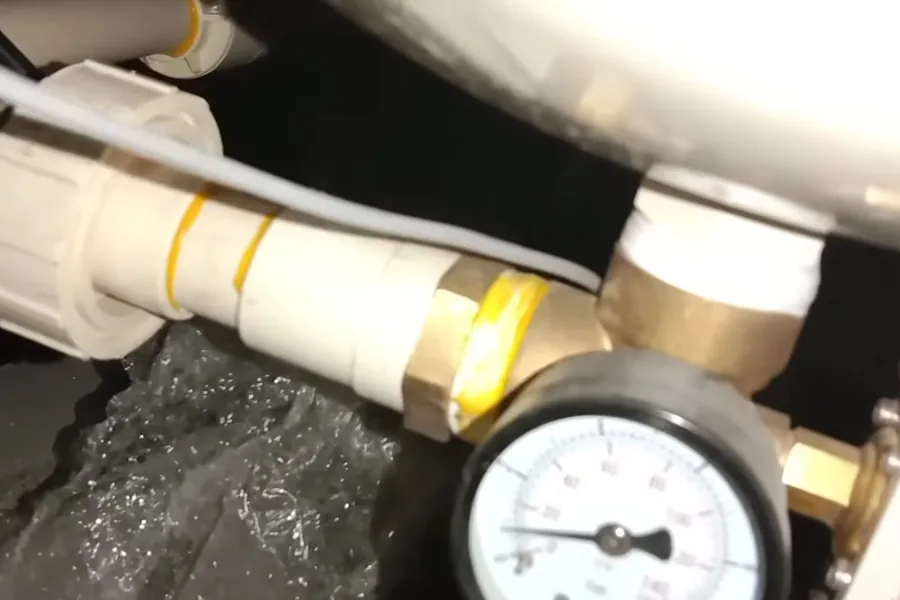
You can buy an inexpensive pressure gauge that screws onto a hose bib and tells you your static pressure in seconds. If it reads above 80 psi, your home is a candidate for a regulator, and you are likely wearing out fixtures and appliances faster than necessary. If it reads very low, the cause is worth tracing. Either way, correcting pressure is one of the cheaper ways to protect an aging plumbing system, and it pays for itself in fixtures and appliances that last longer.